Showing posts with label Dinner Plate Dahlias. Show all posts

Thursday, January 19, 2017

HALLOWEEN ARRANGEMENTS -- VOTIVE HOLDER USED AS A VASE


This votive holder lantern makes a great vase for a fall floral arrangement. The flowers are in an orange vase and placed inside the lantern.


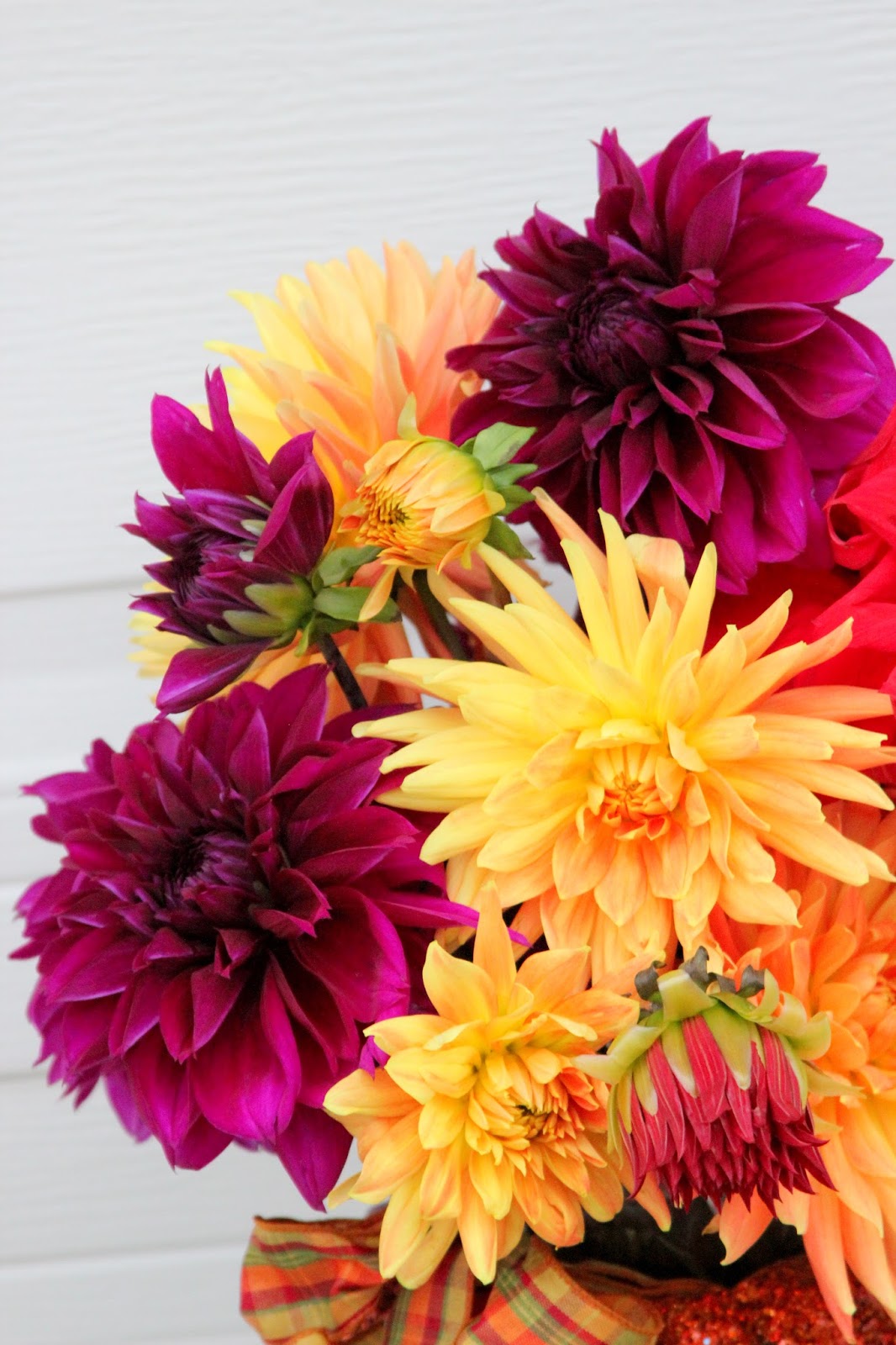
Dinner plate dahlias were used for the Halloween arrangement. "October Sky," the orange/peachy one is actually grown on the same plant--the flowers have variable colors--no two blooms are exactly the same.  The rosy purple one is "Thomas Edison."


This arrangement was made on the 30th of October. And, as you can see, the flowers are big and beautiful. They will continue on that way until a killing frost--usually in November. And, like I've mentioned before, the more stems you cut, the more blooms you'll end up having.

HALLOWEEN ARRANGEMENTS -- USING DECORATIONS FOR VASES


This Halloween jack-o-lantern decoration has a glass jar inside, holding the floral arrangement.  I'm always on the look out for decorations I can use for them.


The fall dinner plate dahlias are the perfect flower to use in this October arrangement.  Used are rosy purple "Thomas Edison," yellow-orange "October Sky," and red "Envy."


Dinner plate dahlias take approximately 90 days from the time of planting to harvest. However, the wait is well worth the wait!


Nurseries have plants already leafed-out to plant in your garden, but I always buy the tubers and plant in spring, after the chance of frost of over. For zone 6, that's the day after Mother's Day.

DINNER PLATE DAHLIAS AND STATE FAIR ZINNIAS -- BEAUTIFUL COLORS FOR COMPLIMENTARY FALL ARRANGEMENTS


I love pairing dinner plate dahlias with State Fair zinnias. Both have huge blooms, and compliment each other well in arrangements.


This arrangement has creamy white and bright golden yellow State Fair zinnias. The zinnias have a variety of blooms--from single to fully double. Pictured is a creamy white bloom measuring 6" across, with layer after layer of petals. Gorgeous! There are also singles and semi-double ones in the bouquet.The bright golden color adds to the arrangement; complimentary colors always provide drama to the bouquet.


The more stems you cut of both of these plants, the more they will bloom. Their large, colorful blooms will continue through the summer and fall, until a killing frost in the fall--usually November here in zone 6.


Working with these glorious blooms is always a pleasure. I'm always anxious to go out and decide which will be used that day for a new arrangement. Because of the heavy bloom this year, I have used them widely in the weekly arrangements.

DINNER PLATE DAHLIAS IN WARM, FALL COLORS -- Still going strong in October!


These beautiful warm-colored dinner plate dahlias make the perfect arrangement for Autumn in the first weeks of October. In shades of apricot, orange, golden, yellow and red, the huge blooms hold their shape well for a week, sometimes more.


I love this vase--it hangs from a hook at the top of the piece, with a base that keeps it erect. I collect vases and baskets that I think will make a nice presentation. Pictured here are yellow "Kidds Climax," red "Zorro," and orange-apricot "October Sky."


No two dahlias of "October Sky" are alike. Some may have more orange, others have more apricot or yellow. At any rate, they are beautiful.


As I've mentioned several times, the more you cut stems of these big blooms, the more they flower--so, snip away! 

In zone 6, the tubers need to be dug and stored until replanting in the spring. Dig two weeks after the first killing frost. It's usually November here.  Shake off excess soil and let the tubers dry out for a few days before storing. I've used several methods--wrapping in newspaper, layered in sawdust, vermiculite or perlite, or even just in open boxes. Keep in a cold, but not freezing area, like a shed. Check on them during the winter to make sure they don't get mold on, or are drying up. 

DINNER PLATE DAHLIAS -- THE MORE YOU CUT, THE MORE THEY BLOOM


Beautiful dinner plate dahlia blooms of "Kidds Climax" and "Kelvin Floodlight" make a pleasing arrangement for the end of August. Kidds Climax, with its rosy raspberry bloom, is always perfect--and goes well with a myriad of other flowers. Paired with it, Kelvin Floodlight highlights the yellow at the center of the petals of Kidds Climax.


I love growing and arranging these majestic flowers. Even a single dahlia in a vase takes your breath away. Multiple blooms are a site to behold--lots of stares and comments because of their size and beauty. I highly recommend these beautiful flowers. In my zone, the tubers need to be lifted after the first killing frost. The tubers can then be stored until spring, to be planted out when all danger of frost has passed. Dinner plate dahlias are late bloomers, taking about 3 months from planting to harvesting, but well worth the wait.

DINNER PLATE DAHLIAS -- COMPLIMENTARY COLORS ADD DRAMA TO ARRANGEMENTS


Dinner plate dahlias are showy, easy-to-grow flowers that add drama and color to summer and fall arrangements. This end-of-August arrangement was at the starting of the peak season for the huge blooms.


Pictured here are sunny, huge "Kelvin Floodlight" dinner plate dahlias. They can be as much as 11" across.  This particular variety is especially prolific, having tons of blooms on a single plant all through the summer and into the fall.


Rosy purple "Thomas Edison" has lovely blooms measuring 9" across, and is another heavy bloomer. The more you cut, the more they bloom. I use them in arrangements all through late summer and into fall.


Cut when centers are still solid for best results.  Some people smash the stem ends with a hammer, or even sear the stems with a match. I really haven't noticed this helps with longevity in the arrangement.  I cut early in the morning,or at dusk. If cutting at dusk, place in luke warm water overnight, then cut off an extra inch, on the diagonal, to arrange. 

As always, keep out of direct sunlight and drafts when displaying your arrangement, and use a floral preservative in the water.

Wednesday, October 21, 2015

HALLOWEEN FALL FLOWER ARRANGEMENTS - Fall colors with Zinnias, Mums, Dahlias, and Monkshood

Fall temperatures bring an end to many flowers in the garden. Zinnias, dahlias and mums however, are still going strong. Moreover, monkshood, a fall blooming perennial, usually starts it's bloom in October, lasting into November here in zone 6.  The week's arrangement features the colorful tall State Fair zinnias, garden mums, dinner plate dahlias, and monkshood. The tall purple spikes of monkshood grow as tall as 5 feet, and are a welcome sight in the fall with their 'hooded' flowers. All parts of this plant are poisonous, and are best in the back of the bed not only for this reason, but also because of its height. I always handle them with gloves, and have never had a problem in the many years I've grown them. They make lovely bouquets, having a long vase life, especially if cut in the bud stage. FYI: Several plants commonly grown in gardens are poisonous. They can cause nausea, vomiting, rapid heart rate or diarrhea if ingested, or cause adverse effects on the skin, such as rashes, itchiness, or even blisters. I grow all but 2 of these perennials and have never had any sort of problem with any of them. However it is wise not to ingest any of them, and I work with gloves at all times. Wisteria, foxglove, hydrangea, hyacinths, lily of the valley, chrysanthemum, rhododendron, azalea and narcissus are all toxic, but if handled correctly you should have no problems. 


Thursday, September 17, 2015

COLORFUL SUMMER ARRANGEMENTS - Dinner plate dahlias, roses,

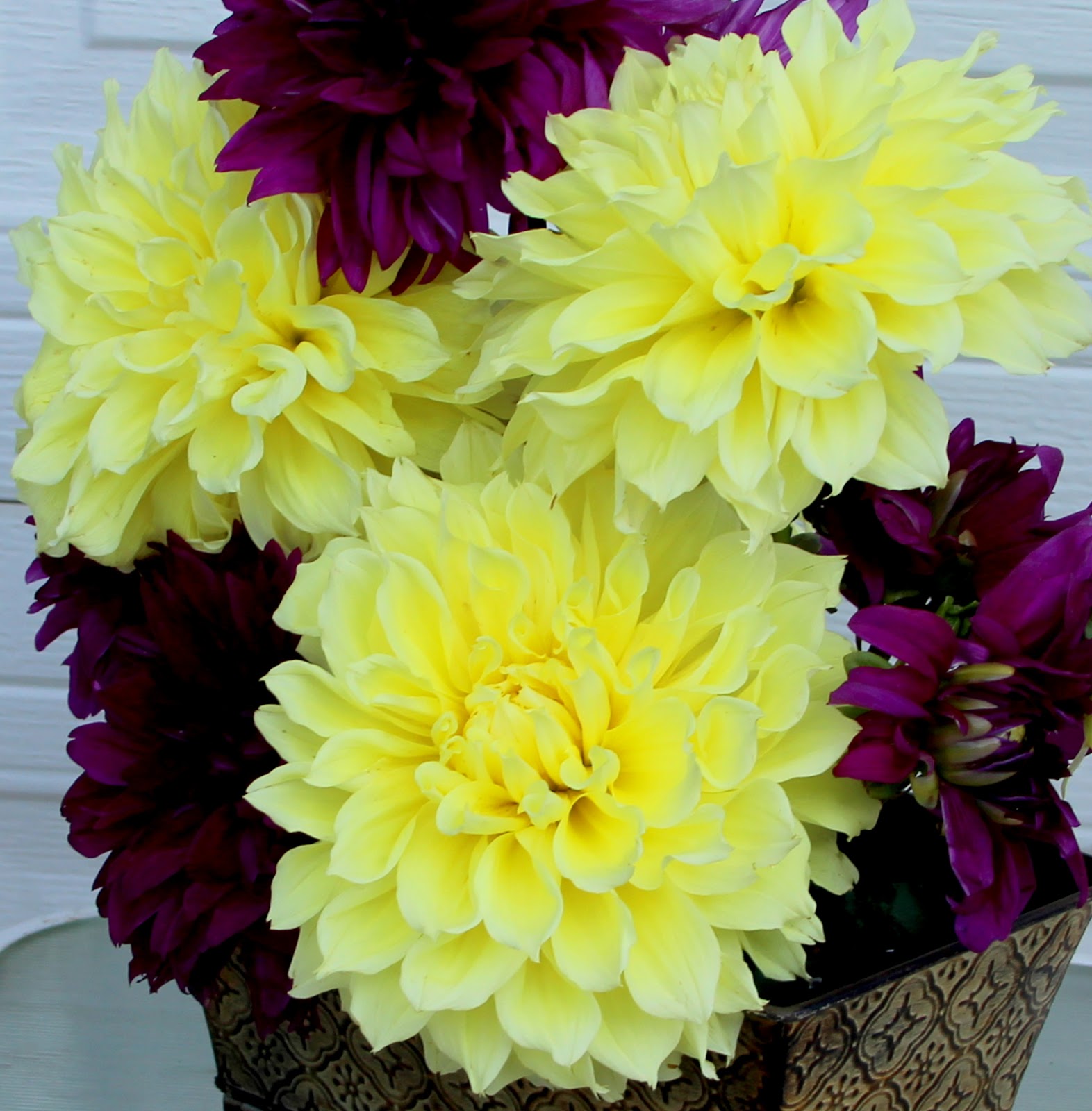
September 7th and the garden is colorful with dinner plate dahlias, hybrid tea roses and more gladiola and zinnias. The zinnias will bloom until a killing frost. Dinner plate dahlias, the giants in the garden, aren't hardy, and need to be pulled two weeks after a killing frost in the fall, when they have turned black. If necessary, carefully divide the 'fingers' of the tubers--sometimes there will be many--other times there won't be. Shake off the soil and let them dry for a few days before storing in a dry, dark place for the winter. Check on them periodically to make sure they aren't dry or molding. If dry, take a paper cup of water and put in the box with them.  If molding, brush off and make sure they aren't in a damp or humid area. Replant in the fall. Pictured here are three of my favorites: Pink, with a yellow heart "Kidd's Climax," white "Fleurel," and yellow "Kelvin Floodlight." 


Saturday, September 12, 2015

MULTI-COLOR SUMMER ARRANGEMENTS with DINNER PLATE DAHLIAS, GLADIOLA, LILIES and STATE FAIR ZINNIAS

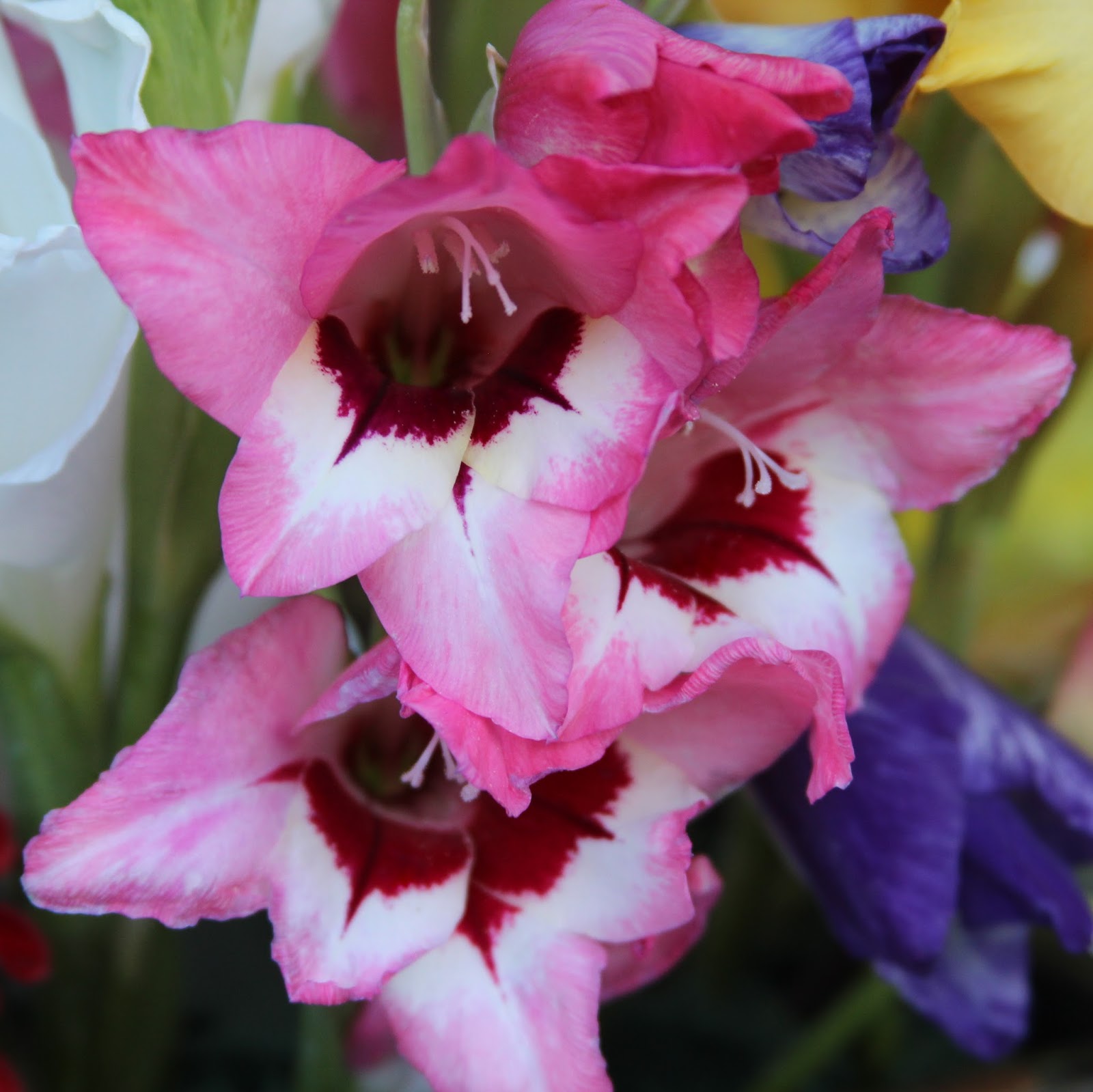
Bright colors in a myriad of warm tones make up the July 26th arrangement. Gladiola's are used again, and they will continue blooming until early fall, after planting them at two-week intervals through late spring.The mix today has yellow, white, pink, purple, and a multi-colored pink, red and white blooms.The first dinner plate dahlias of the season are out, and Kelvin Floodlight is one of my favorite yellows. State Fair zinnias, which will bloom through the fall until a killing frost and the last of the lilies, Flash Point, an OT lily. OT lilies are crosses between a trumpet lily and an Oriental lily--with the best of both combined. I like them in my garden zone 6 because they are more hardy and long-lived than the Orientals.